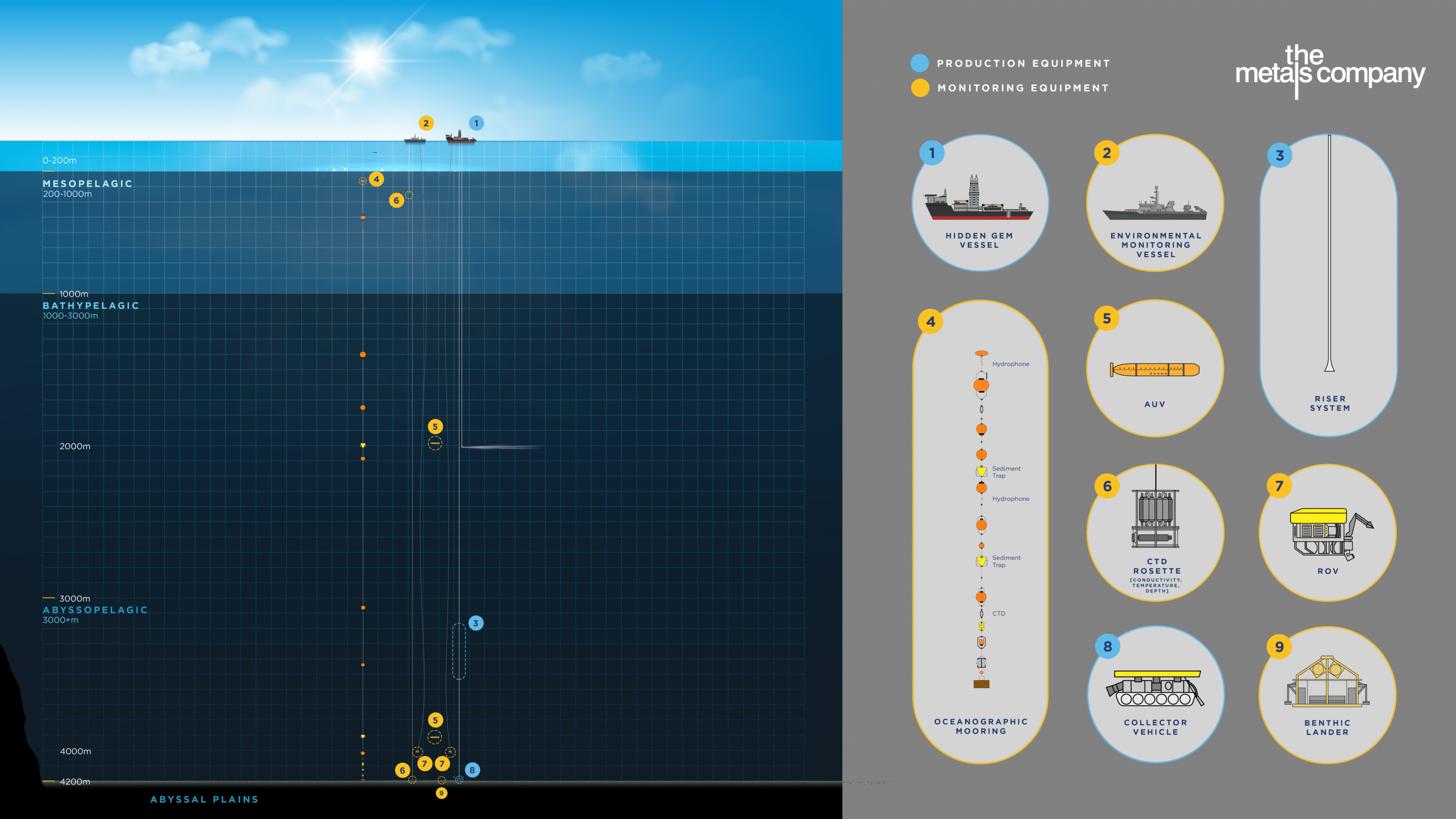
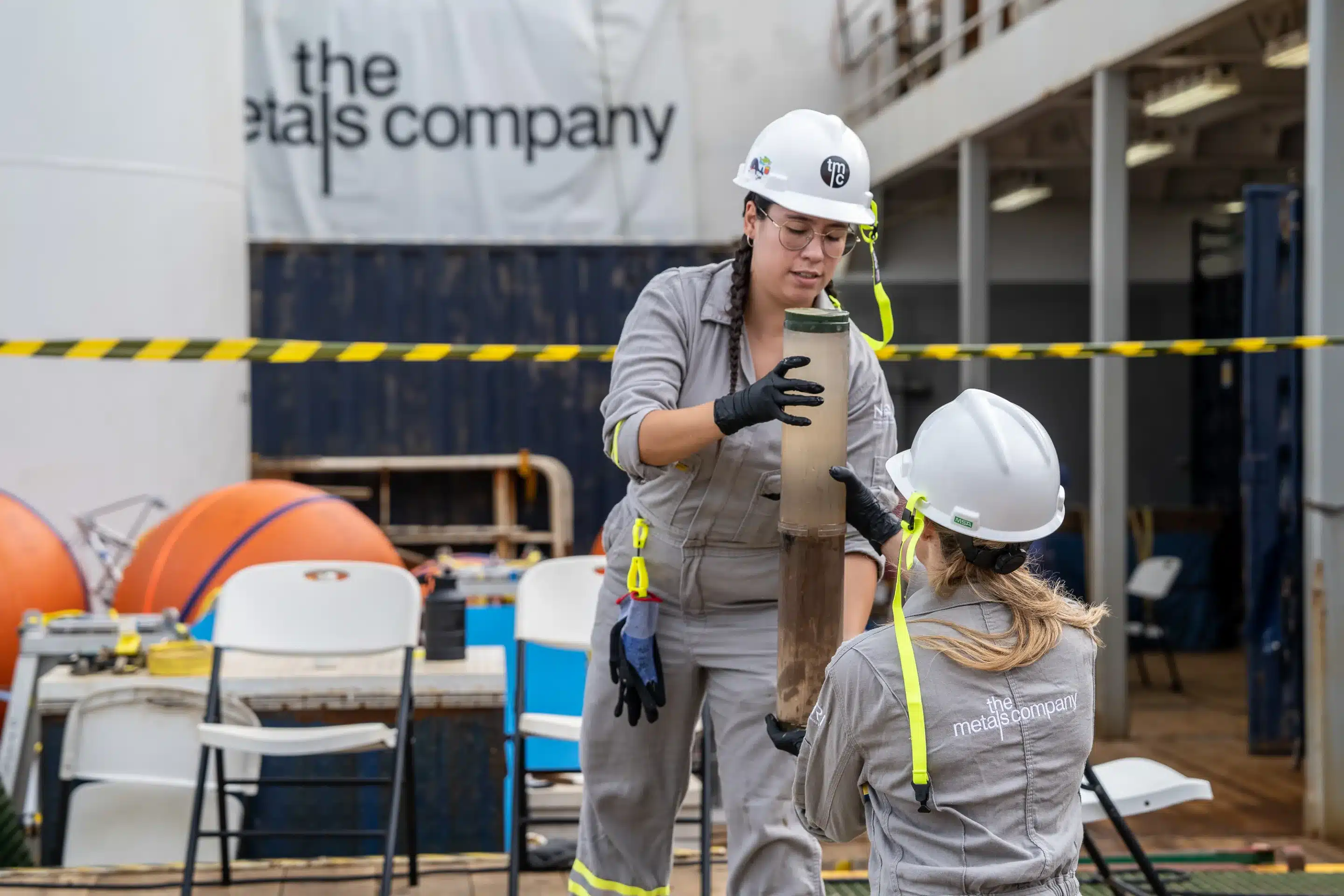
We are undertaking one of the most comprehensive deep-sea research programs in history.
Research
The purpose of our offshore environmental and social impact assessment (ESIA) program is to understand, predict, and mitigate wherever possible the impacts of collecting polymetallic nodules from the Clarion Clipperton Zone. Our offshore ESIA is also advancing the fields of deep-sea science, environmental monitoring, and adaptive management of environmental impacts.
The data we’re collecting in collaboration with some of the world’s foremost independent experts in marine science is shared freely with the international community, and our deep-sea samples are being studied at labs around the world.
We’ve achieved several world-firsts and other noteworthy milestones:
- Independent scientists conducted the deepest-ever sampling of pelagic biota at over 4,000 meters.
- Data from two baseline campaigns submitted to the ISA’s DeepData platform in 2023 represent the largest molecular-based assessment of macrofauna using box cores ever compiled.
- During our 2022 pilot nodule collection trials, the first in the CCZ since the 1970s, independent scientists successfully monitored an integrated deep-sea mining test in real-time for the first time in history.
The insights from our offshore ESIA continue to inform engineering decisions and help us develop technologies to collect polymetallic nodules with the lightest possible touch. These studies will come together to form a comprehensive Environmental Impact Statement, the key component that will underpin our application to begin commercial operations.
We have already begun publishing many of the key findings from our ESIA. Learn more about our understanding of the validated environmental impacts of test mining and expected impacts of commercial-scale operations in this summary.
To find out more about any of our research areas, get in touch.
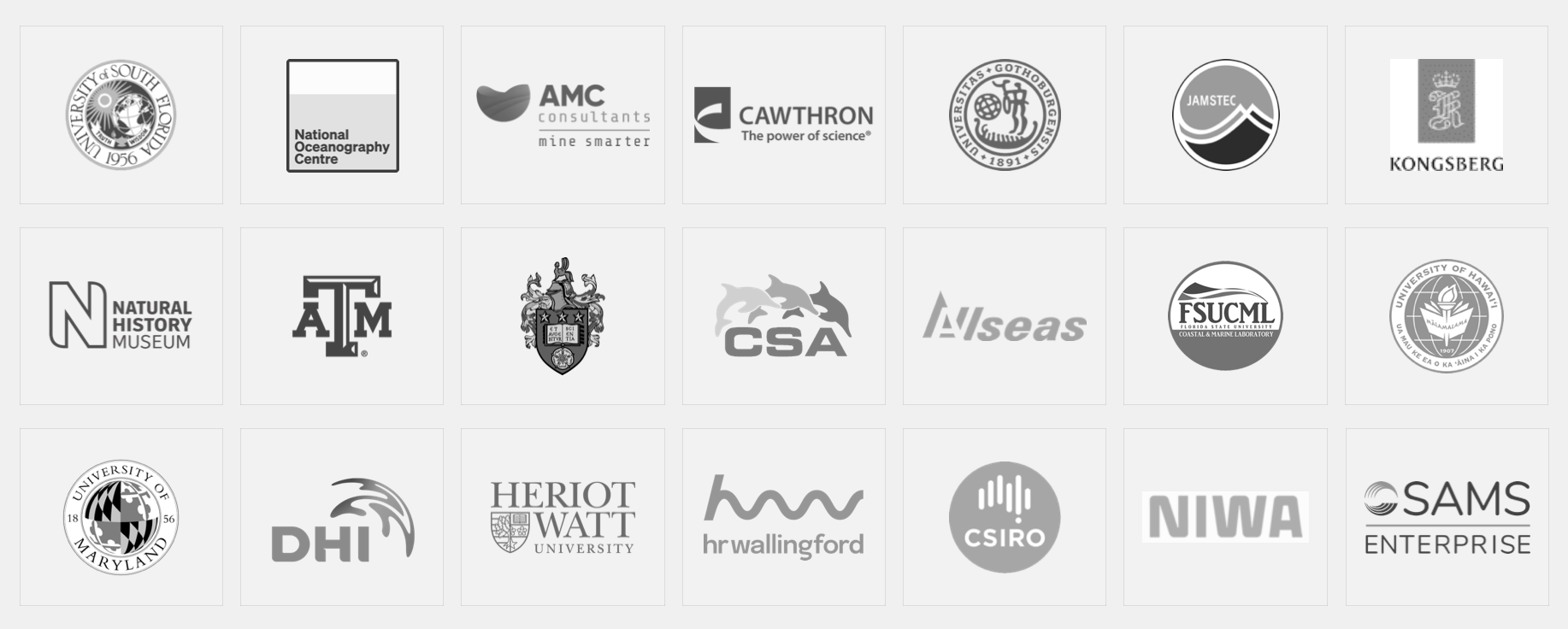
Our Partners
Resource Definition and Offshore Environmental Impact Assessment