
Fifty years ago, one of the first deep-sea mining prototypes used a churning Archimedes-screw drivetrain that ploughed through the seafloor — leaving furrows as deep as 80 centimeters.
Fast forward to today. TMC’s offshore nodule collection system was meticulously engineered together with Allseas using learnings from decades of offshore innovation not just to collect nodules, but to minimize impacts to the surrounding ecosystem. Our approach represents a new era of deep-sea design where environmental science directly informs engineering decisions.
By basing engineering decisions upon rigorous environmental research, the result is a nodule collection system designed from the seafloor up to minimize impact while maximizing efficiency. Here’s how that principle shows up in the details.

Collect nodules, not mud: the coanda effect
The Coanda nozzle — first conceived in the 1970s and perfected through modern modeling — leads our system’s interaction with the seafloor, combining efficiency with ecological sensitivity.
The Coanda design uses curved flow dynamics to create lift, coaxing nodules into the collector without digging or dredging. The result: a dramatic reduction in sediment intake and seafloor impact.
For Allseas engineers, it was a question of optimization: perfectly spacing and individually articulating the nozzles to ensure that they hover above the seafloor at a distance that maximizes pickup while minimizing the amount of sediment that enters into the collector. For our environment team, it meant a leap forward in controlling the footprint of the operation.

Smarter separation at the source
As that 1970s prototype burrowed its way across the seafloor, it used a rotating collector head that raked the seafloor to gather nodules, and an internal crusher to break them. Though effective at lifting them, the collector’s fixed head and need for deep sinkage for traction entrained large amounts of sticky sediment, repeatedly clogging the crusher, as the nodule-sediment slurry passed through its internal hopper on the way to the surface.
Today, the hopper inside Allseas’ collector acts as a quiet environmental safeguard. Using differential flow rates and countercurrent washing, it separates most sediment from the nodules and leaves it at the seafloor.
This simple yet elegant gravity-based system ensures that 95–98% of sediment entrained during nodule collection is released out the back of the vehicle to settle at the seafloor, dramatically reducing the amount traveling up the riser to the surface vessel.
Optimized using test mining learnings and data, our next-generation ‘Hopper 2.0’ increases both capacity and separation time, improving sediment settling efficiency and integrating the hopper structure into the collector’s frame to make it stronger and lighter, reducing its footprint.

Calming the current
The water and sediment that comes into the hopper needs to exit the machine. How it exits makes a huge difference.
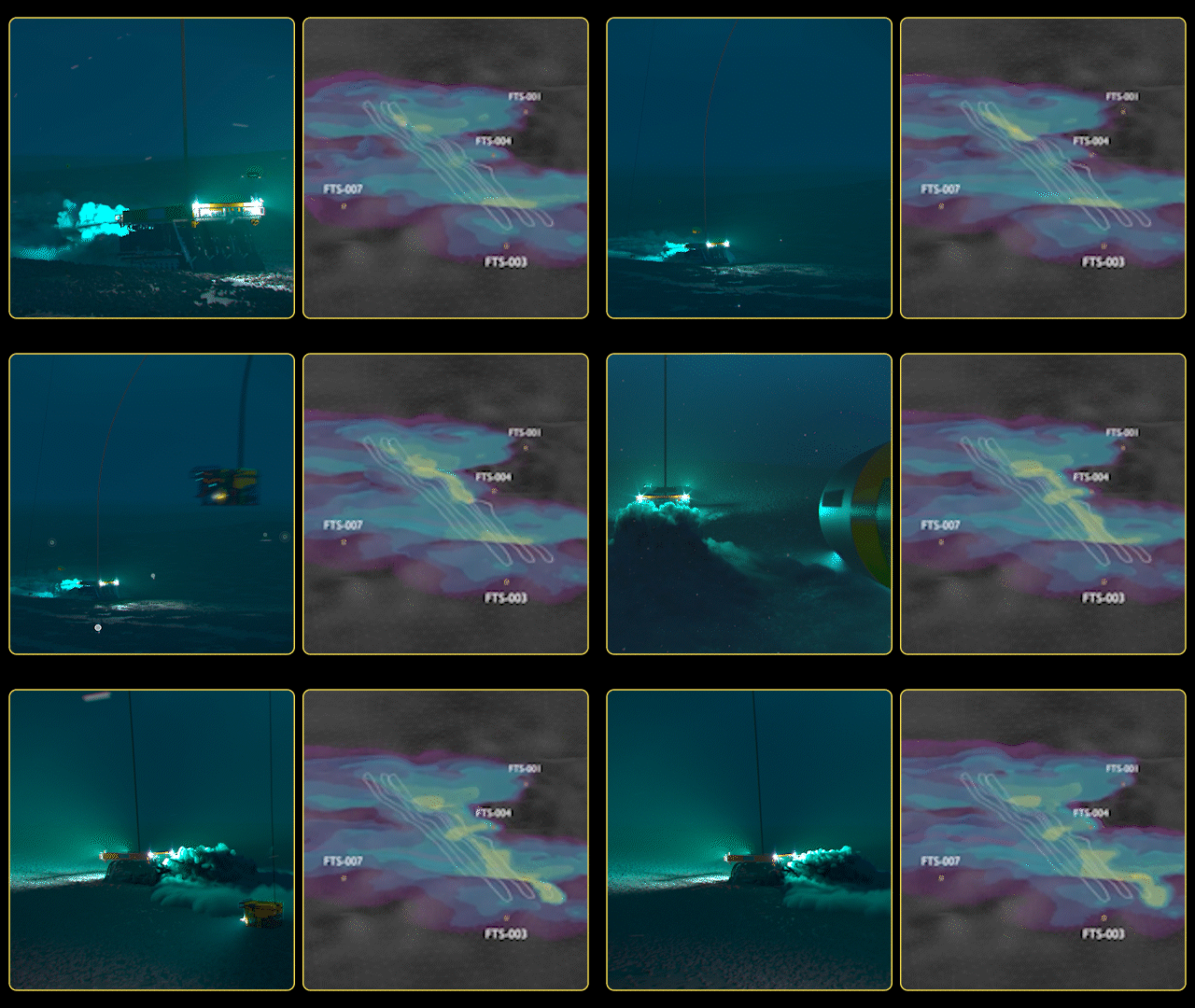
Allseas designed a diffuser system at the back of the vehicle to slow and direct separated sediment toward the seafloor, enhancing the formation of a gravity-driven sediment flow which, instead of lofting upwards, hugs the seafloor and settles within meters of the collection area.
By tuning the diffuser’s flow rate and outlet geometry, engineers keep this benthic plume localized and predictable — minimizing spread and keeping sediment where it belongs.
Make it float
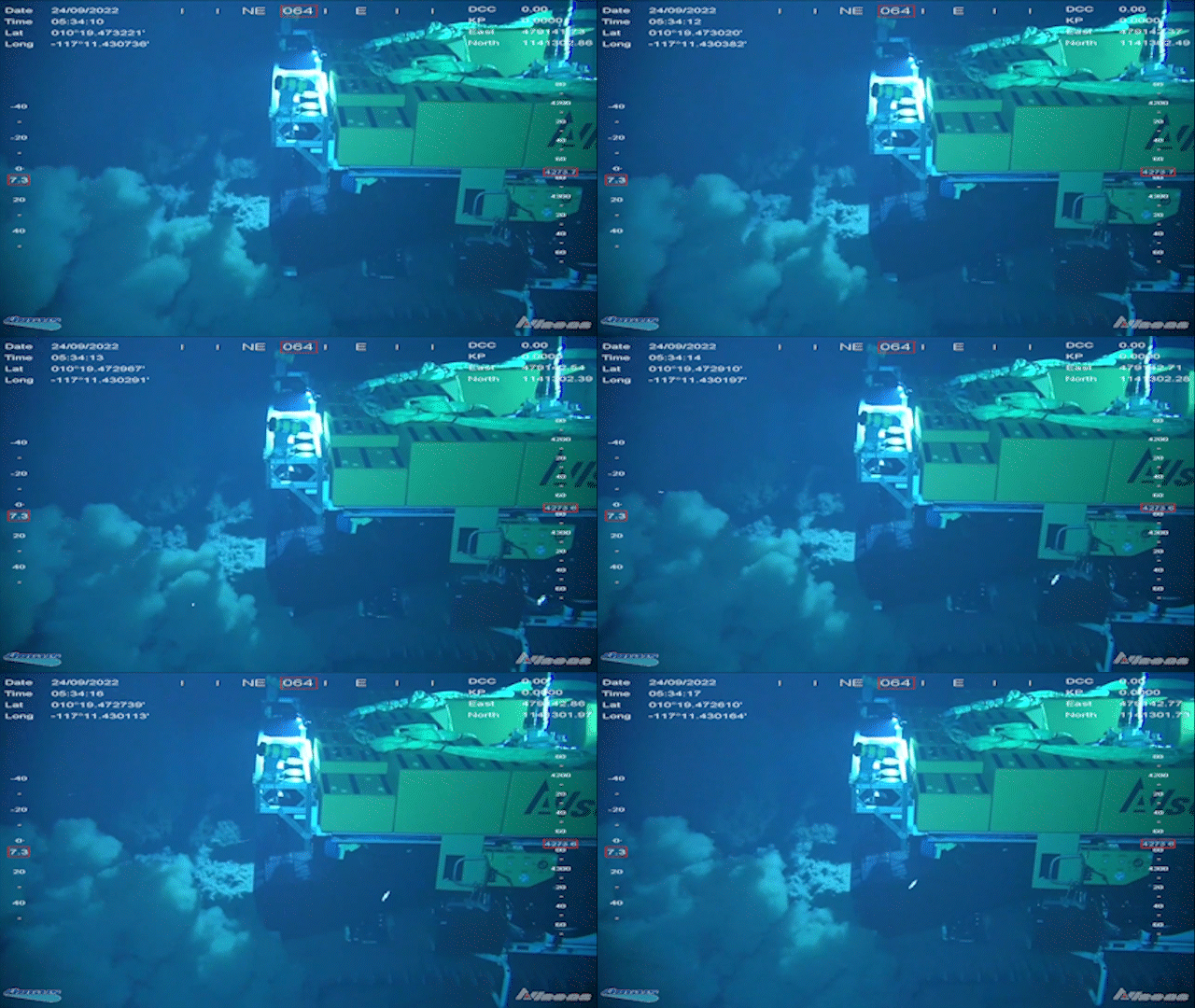
One of the most visible design features of TMC’s pilot collector is also one of its most important: the bright yellow buoyancy material that reduces the robot’s weight under water.
Allseas incorporated buoyancy modules to make the machine move more lightly across the seafloor, reducing its effective weight from 90 tons in air to only 15 tons underwater. With this weight spread evenly over the surface area of its wide tracks, the vehicle traverses the seabed with minimal pressure without getting bogged down— leaving behind faint ripples just a few centimeters.
From an ecological standpoint, that’s transformative. Microbes — which comprise the vast majority of biomass on the abyssal seafloor — live in the top layers of seabed sediment. By leaving behind faint ripples instead of deep furrows, we give the benthic ecosystem the ability to recover.

Midwater release: less up, less down
While Allseas engineers designed the system to leave most sediment at the seafloor, a small amount of mud and nodule fines do come up the riser with seawater. This return water must be discharged back into the water column.
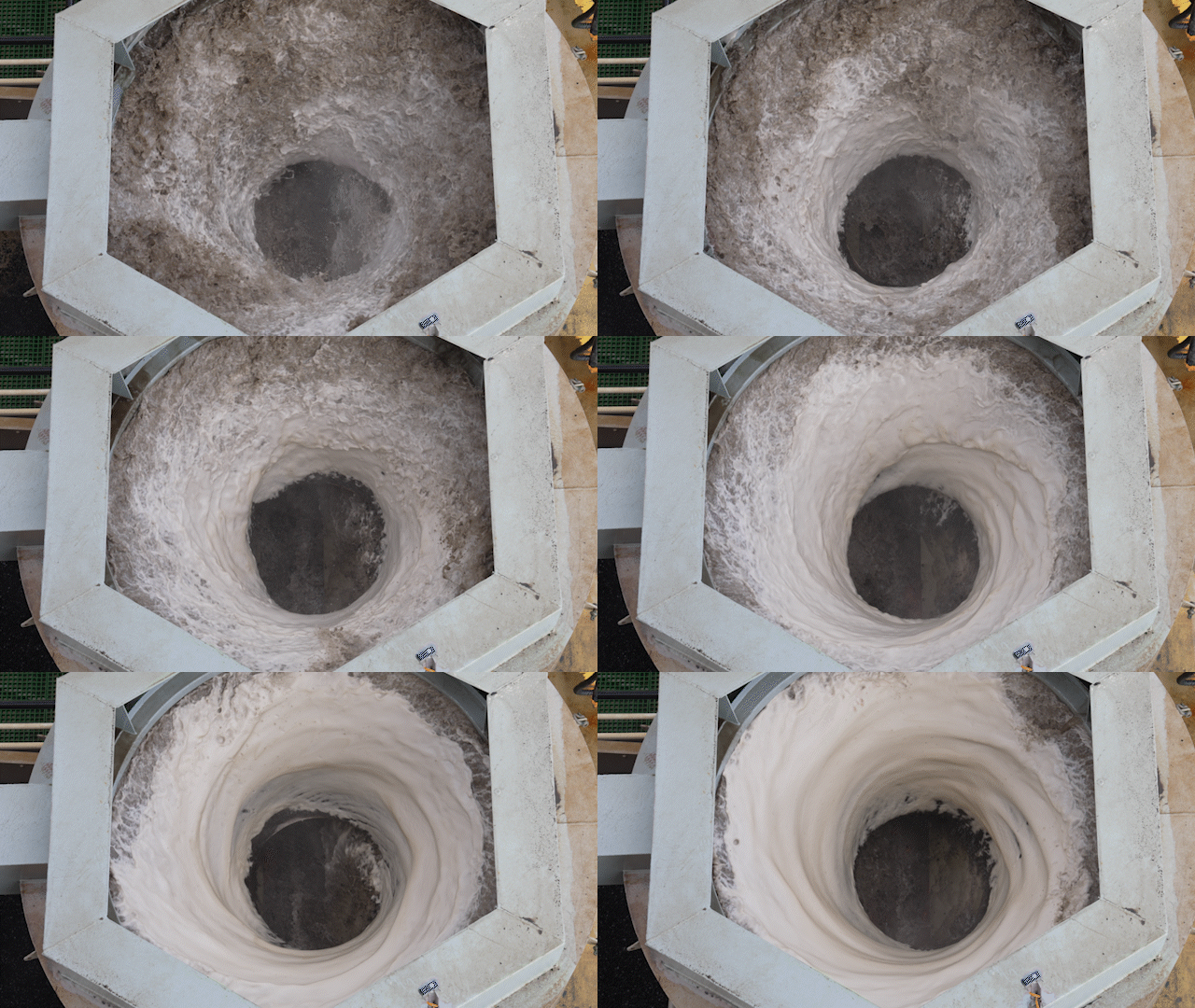
For the commercial system, engineers included ‘hydrocyclones’ into the design of the dewatering process to ensure that abraded nodule fragments are recovered and only sediment and water are released. Hydrocyclones act like centrifuges, spinning out heavier particles for cleaner discharge water, further minimizing the mid-water plume.
That water is returned not at the surface — as was contemplated in the 1970s — but at a scientifically-chosen depth of 2,000 meters — well below the productive upper ocean layers where most marine life and fisheries feed and breed. This depth, determined with top pelagic experts including from the University of Hawaii, bypasses 95% of oceanic life. The vessel’s movement transfers down the return pipe causing the outlet to stir the return flow, rapid dilution to background within a few hundred meters and constraining measurable impacts to a very small volume of water right next to the outlet.
Go with the flow: mine planning to reduce impact
During our 2022 pilot trials we observed that, at 4,000 meters depth, ocean currents tend to behave differently. Instead of steady, one-way flows, we saw the deep ocean “sloshing” gently back and forth with the tides.
This finding may allow us to design adaptive mine plans that work with natural currents — directing any residual sediment back into already mined areas.
Moreover, field data from our trials showed the collector can turn and maneuver with ease, enabling an Adaptive Path Mining (APM) approach. Unlike the long straight tracks of earlier designs, APM lets the collector operate within more compact zones while the surface vessel holds position — which could also cut fuel use by up to 30%. That means less carbon, less noise, and less ocean disturbance.
By refining the technology to further confine plumes and optimize the separation of nodules and mud, our next-generation system will gather more nodules, with less impact.
This is not the 1970s version of deep-sea mining.
It’s a smarter, lighter impact, and more responsible approach — one where engineering precision meets environmental purpose. As Rutger Bosland, our Chief Innovation and Offshore Technology Officer, puts it, “We’ve entered an era of impact-driven design.”